


Page 36 - 00 Volume 5 The Mine
P. 36
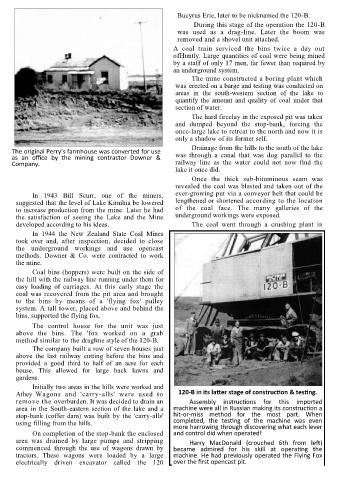
Bucyrus Erie, later to be nicknamed the 120-B.
During this stage of the operation the 120-B
was used as a drag-line. Later the boom was
removed and a shovel unit attached.
A coal train serviced the bins twice a day out
ofHuntly. Large quantities of coal were being mined
by a staff of only 17 men, far fewer than required by
an underground system.
The mine constructed a boring plant which
was erected on a barge and testing was conducted on
areas in the south-western section of the lake to
quantify the amount and quality of coal under that
section of water.
The hard fireclay in the exposed pit was taken
and dumped beyond the stop-bank, forcing the
once-large lake to retreat to the north and now it is
only a shadow of its former self.
The original Perry’s farmhouse was converted for use Drainage from the hills to the south of the lake
as an office by the mining contractor Downer & was through a canal that was dug parallel to the
Company. railway line as the water could not now find the
lake it once did.
Once the thick sub-bituminous seam was
revealed the coal was blasted and taken out of the
In 1943 Bill Scurr, one of the miners, ever-growing put via a conveyor belt that could be
suggested that the level of Lake Kimihia be lowered lengthened or shortened according to the location
to increase production from the mine. Later he had of the coal face. The many galleries of the
the satisfaction of seeing the Lake and the Mine underground workings were exposed.
developed according to his ideas. The coal went through a crushing plant in
In 1944 the New Zealand State Coal Mines
took over and, after inspection, decided to close
the underground workings and use opencast
methods. Downer & Co. were contracted to work
the mine.
Coal bins (hoppers) were built on the side of
the hill with the railway line running under them for
easy loading of carriages. At this early stage the
coal was recovered from the pit area and brought
to the bins by means of a 'flying fox' pulley
system. A tall tower, placed above and behind the
bins, supported the flying fox.
The control house for the unit was just
above the bins. The 'fox worked on a grab
method similar to the dragline style of the 120-B.
The company built a row of seven houses just
above the last railway cutting before the bins and
provided a good third to half of an acre for each
house. This allowed for large back lawns and
gardens.
Initially two areas in the hills were worked and
Athey Wagons and 'carry-alls' were used to 120-B in its latter stage of construction & testing.
remove the overburden. It was decided to drain an Assembly instructions for this imported
area in the Southeastern section of the lake and a machine were all in Russian making its construction a
stop-bank (coffer dam) was built by the 'carry-alls' hit-or-miss method for the most part. When
completed, the testing of the machine was even
using filling from the hills. more harrowing through discovering what each lever
On completion of the stop-bank the enclosed and control did when operated!
area was drained by large pumps and stripping Harry MacDonald (crouched 6th from left)
commenced through the use of wagons drawn by became admired for his skill at operating the
tractors. These wagons were loaded by a large machine. He had previously operated the Flying Fox
electrically driven excavator called the 120 over the first opencast pit.

